

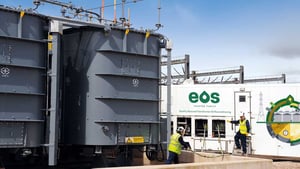
Insulating oil in transformers degrades over the course of the operational time and can cause a drop in performance, damage or failures. To counteract this and maintain the quality of the insulating oil, there are various options. In this blog article, you will find out what these are, why we recommend mobile regeneration of transformer oil on site and what the procedure is for this.
“Mobile regeneration significantly extends the service life of transformers while maintaining a high level of operational reliability and oil quality. Since no new transformer oil is required, the process also has a positive impact on total operating costs.”
– Kilian Gerbl, Managing Director, Electrical Oil Services
Avoiding transformer failure
Depending on the situation and condition of the insulating oils in transformers and tap-changers, there are various technical options to improve the quality of these oils.
The most common procedures to improve the transformer oil quality are:
-
Transformer oil change on site with new or recycled insulating oil
-
Drying, filtering and degassing of the transformer oil by means of an oil treatment plant (= insulating oil treatment or processing)
-
Mobile transformer oil regeneration for deep cleaning.
Mobile regeneration, insulating oil replacement or classic transformer oil processing – what are the differences?Depending on the condition of the transformer oil and the entire insulation system, different measures may be considered. The following list shows the differences between oil replacement, oil processing and mobile insulating oil regeneration, and which objective is paramount in each case.
Oil processing (drying, filtering, degassing)
Mobile insulating oil regeneration
|
The mobile transformer oil regeneration not only cleans the insulating fluid, but includes the entire insulating system, similar to a dialysis on the human body. Polar impurities such as acids and sludge are removed from the system and the insulating oil is restored to as-new condition.
On-site oil regeneration: Advantages of mobile transformer oil regeneration
The mobile process recycles the insulating fluid directly at the location of the transformer. Not only the transformer oil is treated, but also the entire insulating system of the transformer at the same time. This is ideally carried out under load, but is also possible outside service as well as tank-to-tank, for example while the transformer is being repaired.
The most important advantages for industrial companies and network operators or power supply companies:
-
Extent of transformer oil regeneration
Deep cleaning can capture far more insulating oil than an oil change; EOS® experts speak of up to 97% of the oil content of a transformer. -
Complete measure
The service life of transformers is significantly increased by deep cleaning, as not only the transformer oil but the entire insulating system is covered. -
Reduction of costs
No new transformer oil is needed as a raw material for replacement, thus saving ways and time to produce new insulating oil and achieving a significant CO2 reduction.
Sustainability and regulation: Why transformer oil regeneration is more relevant today than ever beforeThe efficient use of resources is becoming increasingly important for operators of electrical systems. Mobile insulating oil regeneration supports this approach by reusing existing transformer oil and generally avoiding the use of new oil. This significantly reduces material costs, transport distances and emission-intensive processes along the value chain. Interesting in this context: Closed loop model reduces transformer oil waste At the same time, regeneration helps to ensure that transformers continue to operate within the applicable technical and environmental requirements in the long term. Against the backdrop of increasing regulatory requirements for waste prevention, verification and plant availability, mobile regeneration is becoming increasingly important as a sustainable measure in the life cycle of transformers. |
As a leading company for recycled and new transformer oil, Electrical Oil Services (EOS®) offers you various on-site insulating oil processing services in addition to maintenance and repair work on transformers. With their mobile service units, the insulating oil experts carry out any transformer oil regeneration measures - regardless of the manufacturer, size or type of your transformers.
Find out more on our overview page:
For sustainable deep cleaning: Insulation oil regeneration
Do you have any questions? We will be happy to answer them:

Mobile regeneration of transformer oil: It's that simple
The EOS® insulating oil experts usually arrange an on-site appointment before a specific schedule is determined and the actual insulating oil regeneration begins at the customer's site.
Part A:
On-site appointments, tests and analyses
The on-site appointments are a mixture of target/actual comparisons of the insulating oil and the operating equipment as well as a detailed site analysis.
We analyse or ask:
-
Which access routes for the vehicle unit(s) can be used? What needs to be considered at the site? What safety aspects need to be considered?
-
What is the general condition of the transformer and the technical installation? What connections are available for the mobile regeneration unit? In what radius can our mobile vehicle unit be set up?
-
What is the total amount of insulating oil? What is the condition of the transformer oil? What are the results of previous transformer oil investigations?
-
How has the strength of the paper insulation (dissipation factor according to furan analysis, DP factor) been assessed? Is oil regeneration technically the best option in this particular case?
-
Can the regeneration be carried out under load?
-
How long will the application take? How many regeneration cycles are expected to be needed based on the values studied?
-
What are the desired target values?
Part B:
Preparation of a project plan with Method Statement and Risk Assessment
Based on the preliminary investigations, the experts of Electrical Oil Services define in writing the most suitable procedure for the respective customer and location.
On the one hand, it consists of a detailed project plan, which contains the most important information about the scope, tasks, deadlines as well as the agreed results or goals. On the other hand, data on risk assessment and safety evaluation as well as on all important assets are documented and included in the planning.
Part C:
Process sequence of insulating oil regeneration
Once planning is complete, the transformer oil is regenerated in five steps:
Step 1: Initial treatment in the mobile regeneration unit
The transformer oil is first filtered to remove coarse contaminants. It is also heated, dried under vacuum and degassed. During these first cycles, the temperature of the transformer is increased. This supports the regeneration process - as water binds more easily in heated transfomer oil.
Step 2: Introduction of the transformer oil into the process columns
After this standard preparation of the transformer oil and when the desired oil temperature has been reached, the insulating oil is fed into the process columns of the mobile regeneration unit. During this process, the acids and sludge resulting from oxidation are removed and all contaminants are adsorbed. This is done with special Fuller soil in our EOS® process columns.
Step 3: Repeat the regeneration process
The regeneration cycles are carried out until the transformer oil has reached the predefined and agreed values. This can take from a few days to a few weeks - depending on the amount and condition of the insulating oil.
Step 4: Reactivation of the process columns
As soon as the adsorption material of the process columns is saturated, it undergoes reactivation. This prepares the columns for the next regeneration cycle. During reactivation, the transformer oil is continuously circulated and regenerated in parallel process columns - depending on the equipment of the mobile vehicle unit - so that the work on site is optimised in terms of time and technology.
Step 5: Inhibition of the transformer oil with concentrate
During the regeneration cycles, the quality of the transformer oil is regularly checked. After the target values have been reached, there is the option of inhibiting the insulating oil. For this purpose, a concentrate is added to the insulating oil. EOS® experts recommend this step as it provides additional protection against oxidation of the transformer oil.
Register today for our EOS Trusted Purity blog:
|

Recycled transformer oil from Electrical Oil Services
Whether regenerated on site or alternatively reprocessed from used transformer oil in EOS® own production facilities, the Electrical Oil Services product that results is a high quality recycled insulating oil.
Learn more about EOS® recycled transformer oil:
- Recycled EOS® Premium and EOS® Premium X according to IEC 60296:2020
-
Yellow is the new white: EOS® recycled insulating oil is this pure
Conclusion
Transformer oils are in use over a long period of time and must be checked again and again for their grade and quality. These influence the performance of the electrical equipment in which the oil is used as an insulating and cooling fluid. If the required performance is no longer given, the insulating oil experts at Electrical Oil Services recommend having the transformer oil regenerated on a mobile basis. Why? Because the mobile all-round process recycles the transformer oil directly at the customer's site and treats the entire insulating system of the transformer at the same time - perfect for cost- and environmentally-conscious companies.
Find out more in these blog articles:
-
Insulating Oils & Services: Electrical Oil Services at a glance
-
High-quality, sustainable & like new: regenerated transformer oils
-
EOS® Interview: 5 tips for sustainable transformer oil management.
FAQ: Mobile transformer oil regeneration – commonly asked questions1. What requirements must be met for mobile transformer oil regeneration? A technical evaluation of the transformer oil and the insulation system is required. Laboratory analyses, operating data and the condition of the paper insulation are used to check whether regeneration is technically feasible and economically viable. 2. How long does mobile transformer oil regeneration take? The duration depends on the amount of oil, the condition of the transformer oil and the defined target values. In practice, mobile regeneration can take from a few days to several weeks, as several regeneration cycles may be necessary to achieve the desired quality parameters. 3. Can mobile regeneration be carried out under load? Yes, in many cases mobile insulating oil regeneration can be carried out under load. This allows the transformer to continue operating during the process and minimises downtime. Whether regeneration under load is possible is checked during the preliminary investigations. 4. How often can transformer oil be regenerated? Transformer oil can be regenerated several times, provided that the condition of the insulation system – in particular the paper insulation – allows this. The decision is based on analytical tests such as oil and paper diagnostics and is made individually for each system. 5. Does mobile regeneration completely replace an oil change? Mobile regeneration replaces an oil change because it not only improves the oil quality but also removes ageing products from the entire insulation system. 6. How does mobile regeneration affect operating costs? Mobile regeneration can reduce operating costs over the life cycle of a transformer, as new oil is usually not required and costly downtime can be avoided. In addition, the service life of the system is extended, which delays investments in replacement or new procurement. 7. Which standards does regenerated transformer oil meet? Regenerated transformer oil can meet the requirements of the international standard IEC 60296. Compliance with the normative limit values is checked and documented by regular laboratory analyses. |
Have we aroused your interest in a mobile regeneration of your transformer oils? Or do you need more information on the process and scope? Please contact us:
This blog was first published on March 6, 2023 and updated on January 27, 2026.